Wine Atlas · Italy

Veneto

From the Dolomites to the Venetian Lagoon

Veneto lies in north-east Italy and stretches from the peaks of the Dolomites through hills and plains to the Venetian Lagoon. Glera grows on the steep hills of Valdobbiadene, and Corvina east of Lake Garda, around Verona.

Regional capitalVenice
ClimateBreezes from Lake Garda
SoilsMoraine and limestone
Main grapeGlera, Corvina

Educational content for adults

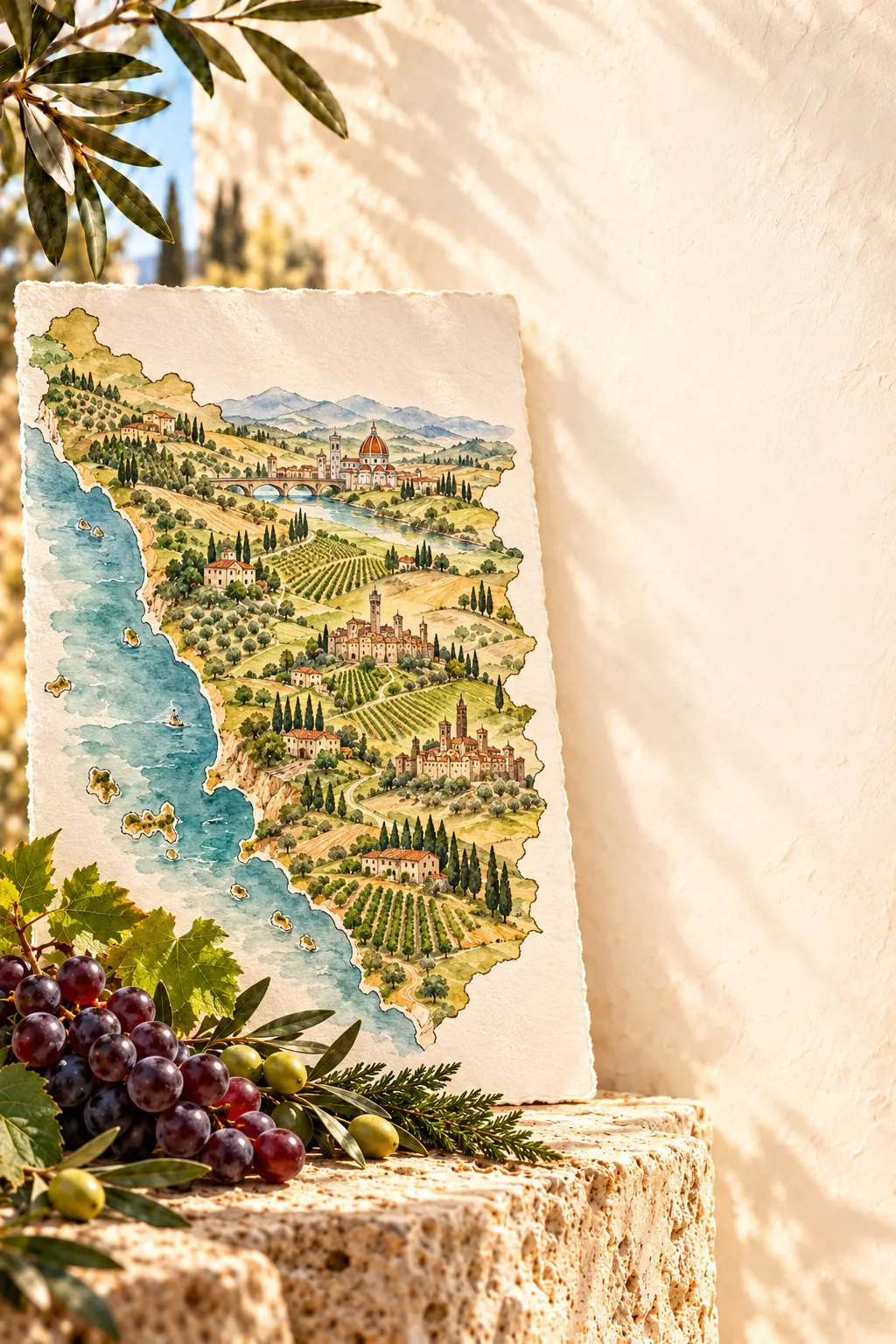
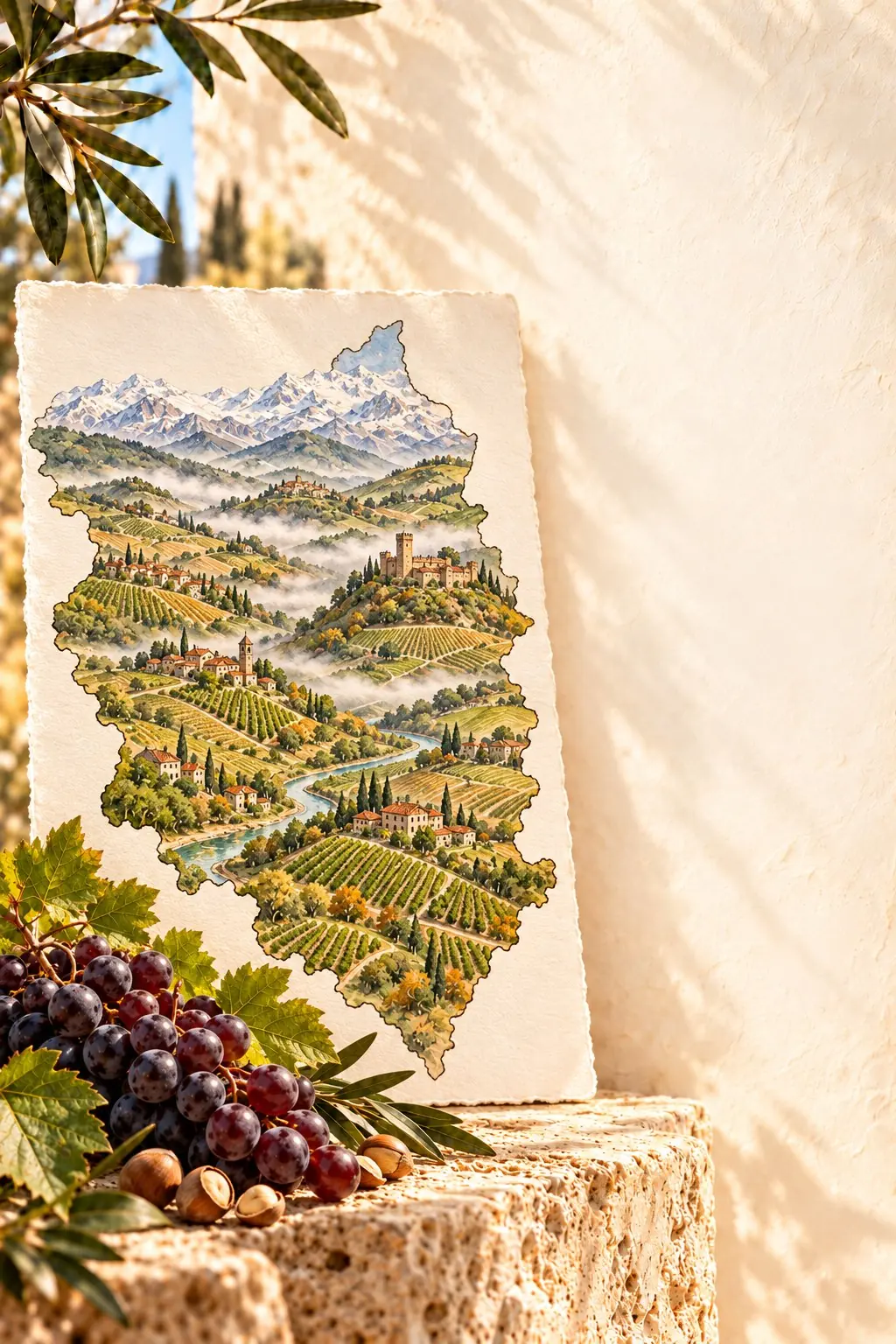
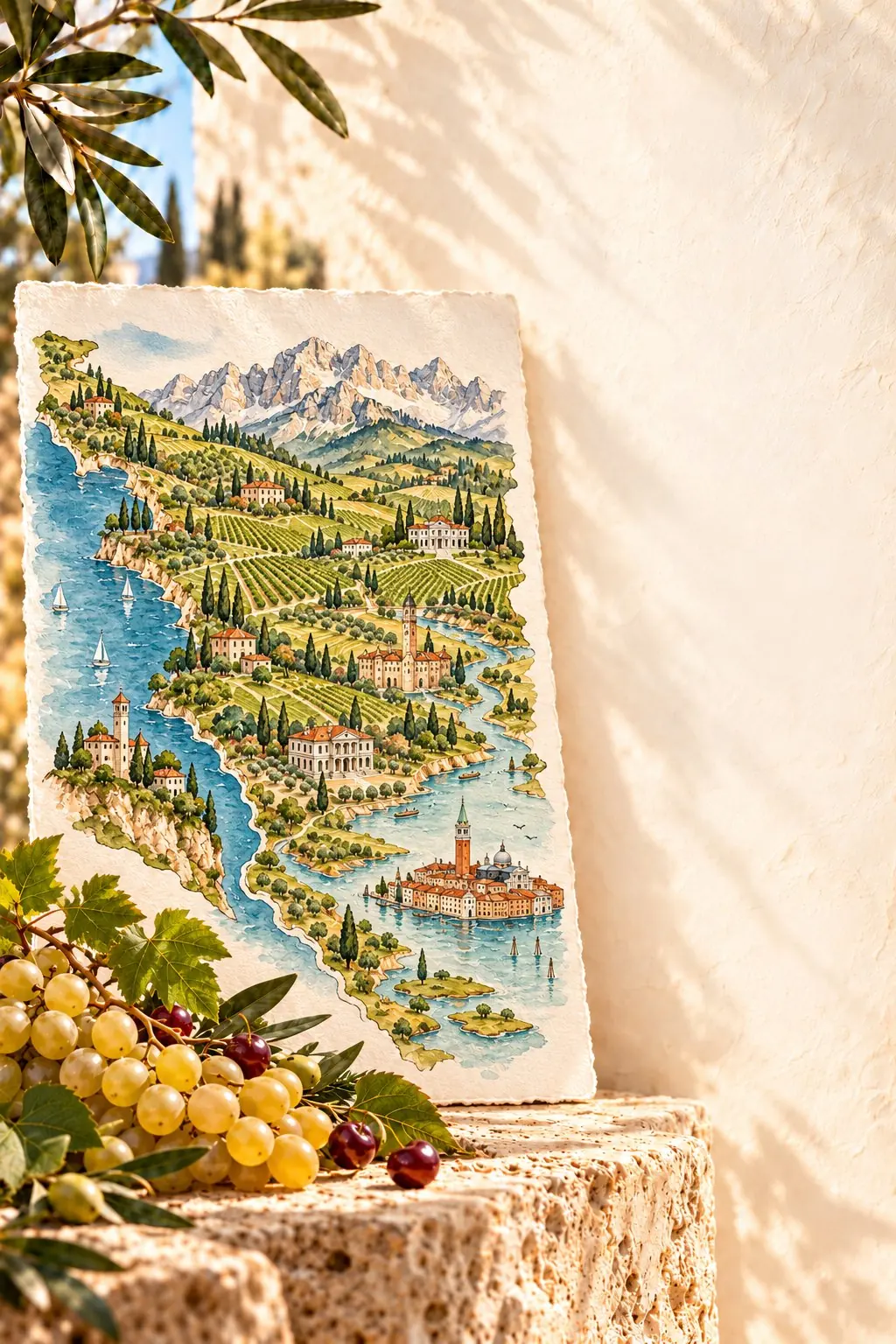
Wine Stories card: illustrated map of Veneto
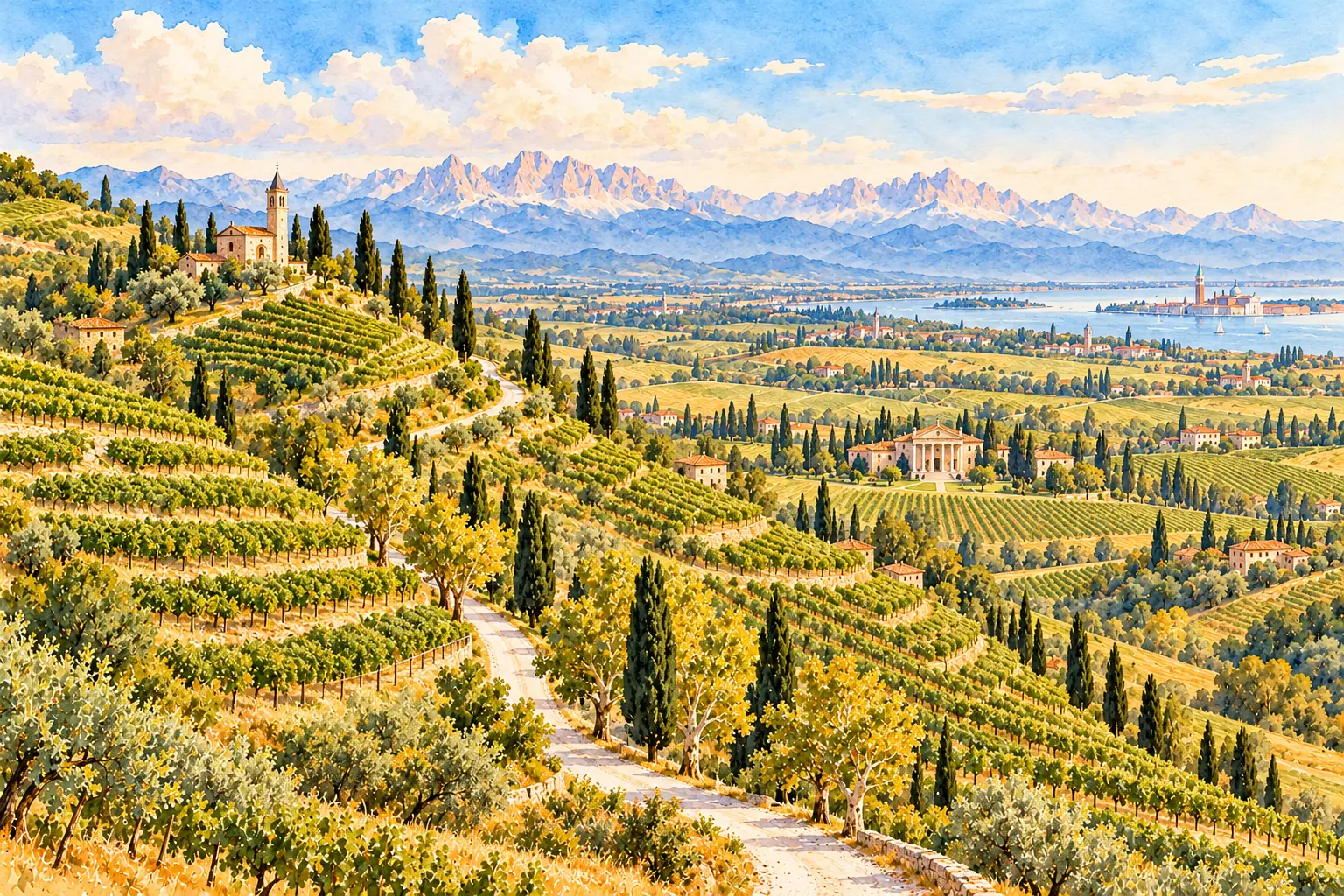
Watercolour: the steep, humped hills of Valdobbiadene with vineyards on grassy terraces, patches of woodland, a village with a bell tower and the Pre-Alps in the background
The Conegliano–Valdobbiadene hills: humped ridges, vineyards on grassy terraces (ciglioni), woods and villages at the foot of the Pre-Alps.

Landscape and history

From the Dolomites
to the Venetian Lagoon.

Italians simply call the region Veneto. The name Venezia Euganea, still echoed in the Polish Wenecja Euganejska, was coined in the 19th century by the linguist Graziadio Isaia Ascoli, in reference to the ancient Euganei people.

Vines were grown here in ancient times. Roman authors praised the Raetic wine from the slopes between Como and Verona, and in the 6th century Cassiodorus, minister to the Ostrogothic king Theodoric, described acinaticum, a wine made from dried grapes, regarded as the ancestor of today’s Recioto.

For centuries the region was ruled by the Republic of Venice, known as the Serenissima. Wealthy Venetian families built country villas on the mainland, many of them designed by Andrea Palladio, and their estates combined the owner’s house with a farm, fields and vineyards. The Republic fell in 1797, and in 1866 Veneto became part of the Kingdom of Italy.

Today Venice and its lagoon, Verona, Vicenza with Palladio’s villas, and the Dolomites are all on the UNESCO list. In 2019 they were joined by the hills of Conegliano and Valdobbiadene, as a cultural landscape shaped by centuries of vine growing.

Timeline

  1. 6th c. ADCassiodorus describes acinaticum, a wine made from dried grapes from around Verona.
  2. 1797Fall of the Republic of Venice, which had ruled the region for centuries.
  3. 1876Italy’s first school of oenology opens in Conegliano.
  4. 1968Soave, Valpolicella and Bardolino receive DOC status.
  5. 2009The Prosecco grape is officially renamed Glera, and Conegliano Valdobbiadene receives DOCG status.
  6. 2019The hills of Conegliano and Valdobbiadene are added to the UNESCO list.

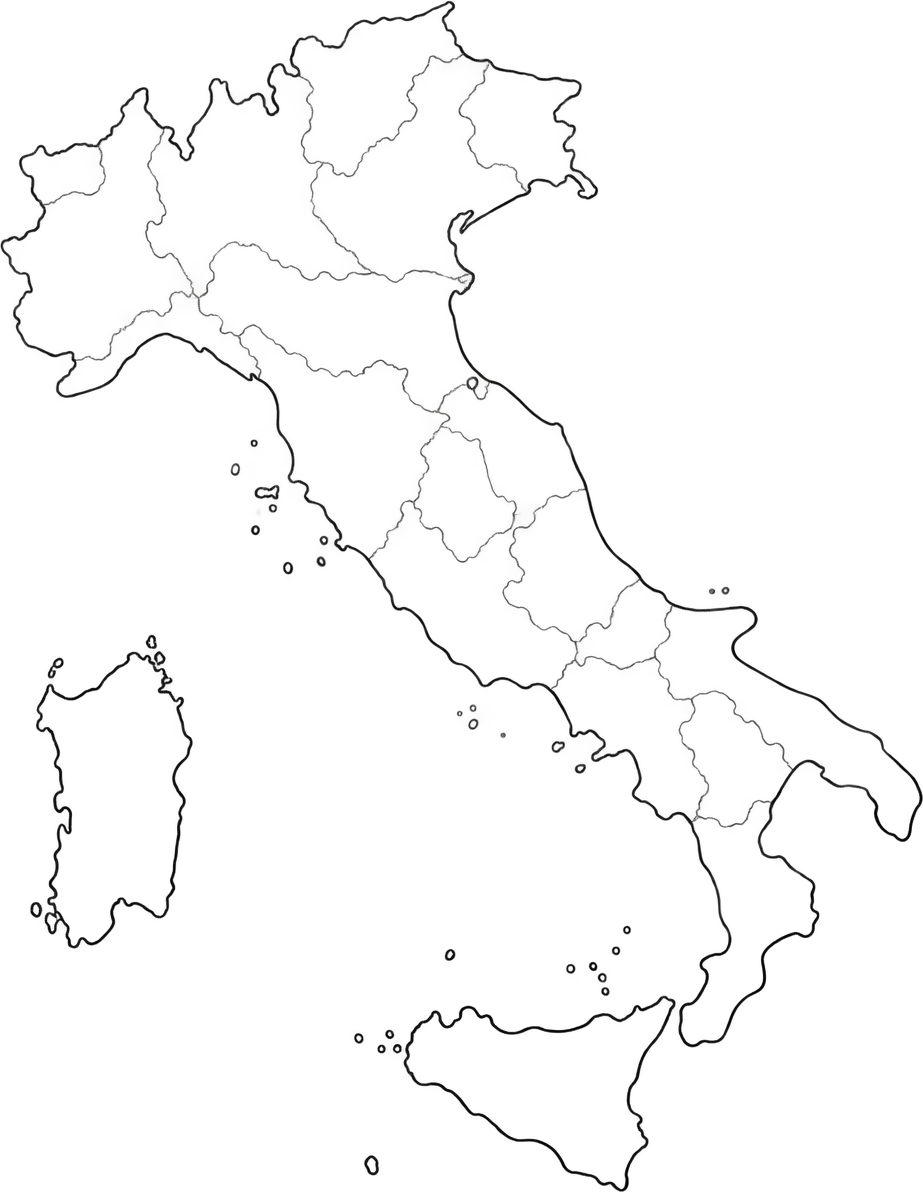
Map of the region

Where it is
and what to know.

  • VeniceThe regional capital on the islands of the lagoon, with its canals and St Mark’s Square. On the UNESCO list since 1987.
  • VeronaA city on the Adige with a Roman arena, added to the UNESCO list in 2000.
  • ValpolicellaA fan of valleys north of Verona, at the foot of the Lessini Mountains.
  • SoaveA small town enclosed by medieval walls, overlooked by the Scaliger castle.
  • Conegliano–Valdobbiadene hillsHumped ridges with vineyards on grassy terraces, a UNESCO landscape.
  • Bardolino and Lake GardaThe eastern shore of Italy’s largest lake, with olive groves and moraine hills.
  • VicenzaThe city of Andrea Palladio, surrounded by his country villas.
  • Euganean HillsVolcanic hills south-west of Padua, with thermal spas.

Climate · Soils · Grape

What shapes
the character of Veneto.

Climate

To the north the region is sheltered by the Alps and Pre-Alps, which hold back cold winds. On the plain, summers are hot and humid and winters cold and often foggy. The Valdobbiadene hills lie between the mountains and the plain, where the days are warm and the nights cooler.

Lake Garda acts as a huge store of heat and moderates temperatures along its shores, which is why olives have grown here for more than two thousand years. Winds blow over the lake regularly: the Pelèr from the north in the morning and the Ora from the south in the afternoon. They air the vineyards and help keep the grapes dry.
Soils

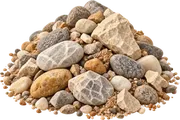
South-east of Lake Garda, an Ice Age glacier piled up an arc of moraine hills (a moraine is a ridge of gravel, sand, clay and stones carried by a glacier). Such soils drain water well. The vineyards of Bardolino and Custoza lie on them.

In Valpolicella, limestones and marls (calcareous clay rocks) from the Lessini Mountains predominate, in places with basalt. In Soave the western hills are limestone and the eastern ones, around Monteforte d’Alpone, volcanic. The Conegliano–Valdobbiadene hills have marls, sandstones and conglomerates, while the Euganean Hills are volcanic in origin.

Grapes

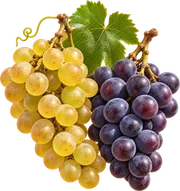
Glera is the white grape of the Conegliano and Valdobbiadene hills. Until 2009 it was called Prosecco, but that name was reserved for the designation of origin and the old synonym Glera was restored. The word Prosecco itself comes from a village near Trieste, in the neighbouring region of Friuli-Venezia Giulia.

Corvina (Corvina Veronese) is the red grape of the Verona area, grown in Valpolicella and around Lake Garda, usually together with Rondinella and Corvinone. White Garganega reigns in Soave, red Raboso along the River Piave, and Moscato Giallo (yellow muscat) in the Euganean Hills.

Designations of origin

Places protected
by law.

DOC and DOCG are the Italian designations of protected origin. They define the area, the permitted grape varieties and the growing rules. They are names of places, not brands or individual producers.

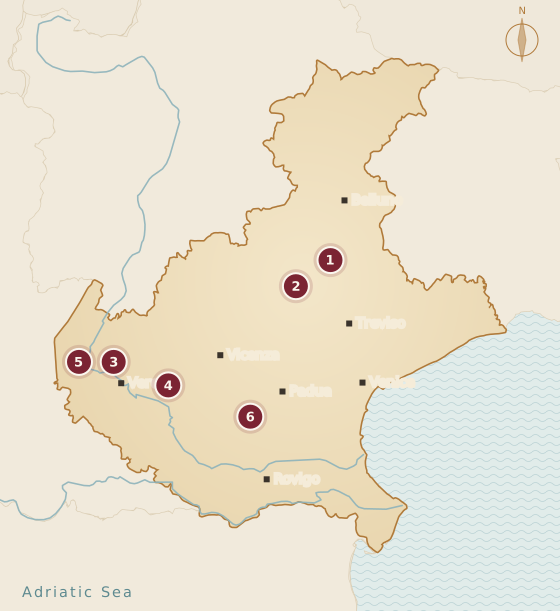
Overview map of Veneto with numbered designation-of-origin areasOverview map: the numbers match the areas listed alongside. Locations are approximate, marking the centre of each area.
  1. 1Conegliano Valdobbiadene – ProseccoDOCGHumped hills between Conegliano and Valdobbiadene, 15 municipalities in the province of Treviso. DOCG status since 2009.
  2. 2Asolo ProseccoDOCGThe hills around medieval Asolo and the Montello ridge, west of the Piave.
  3. 3Amarone della ValpolicellaDOCGThe valleys of Valpolicella north and east of Verona; the name applies to wines made from dried grapes.
  4. 4Soave SuperioreDOCGThe hills around Soave and Monteforte d’Alpone, east of Verona.
  5. 5Bardolino SuperioreDOCGMoraine hills on the eastern shore of Lake Garda.
  6. 6Colli Euganei Fior d’ArancioDOCGThe volcanic Euganean Hills near Padua, home of the Moscato Giallo grape.
Veneto still life: red radicchio from Treviso, a wheel of Asiago cheese, yellow polenta, sardines with onions, a piece of tiramisù and a cup of coffee

Food and traditions

Flavours of Venice
and the Venetian countryside.

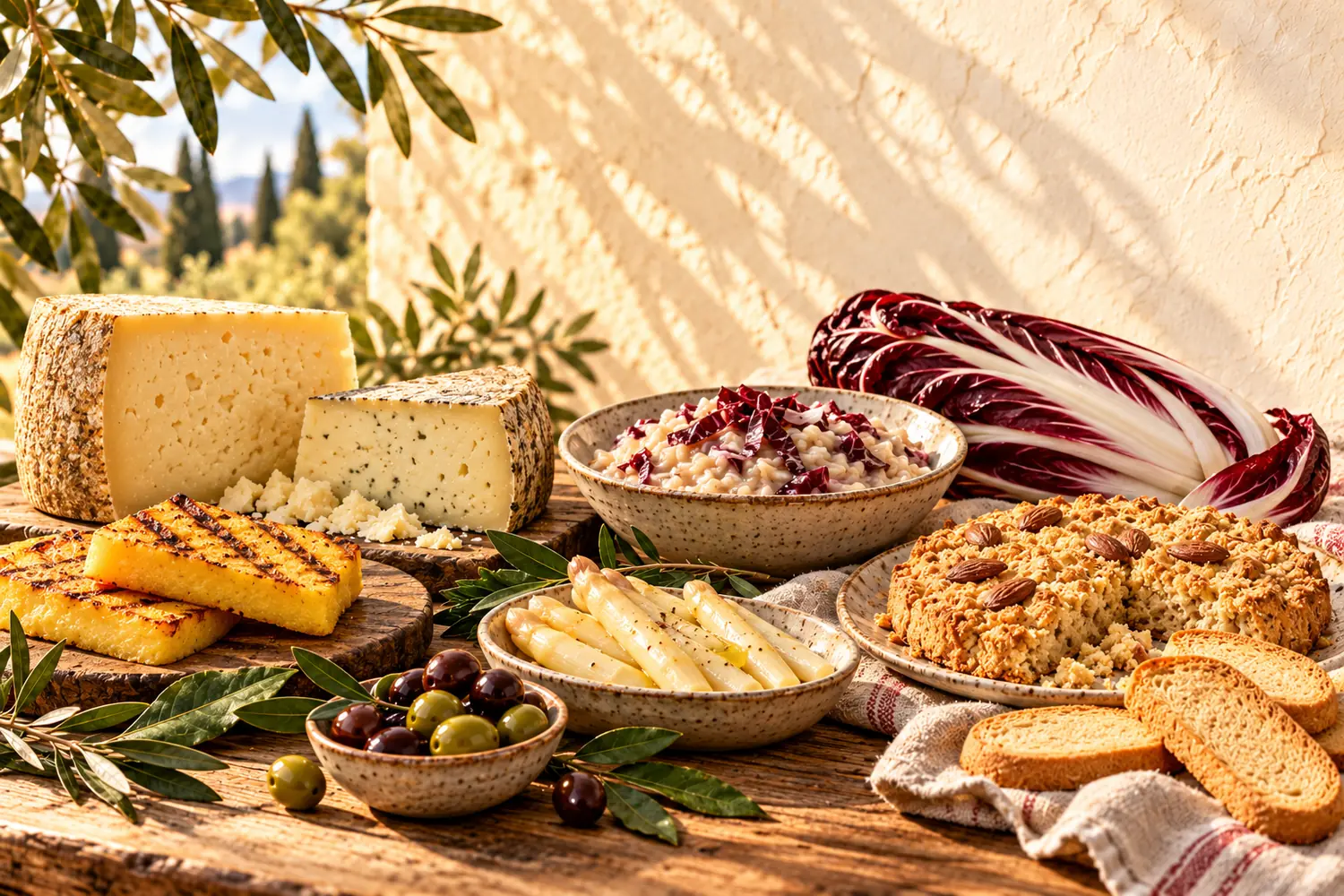
  • Radicchio Rosso di TrevisoA red chicory with long white veins, protected by IGP status. Its late variety matures in winter.
  • AsiagoA cow’s milk cheese from the Asiago plateau, with DOP protected status, young or aged.
  • Sarde in saorVenetian fried sardines marinated in stewed onions with vinegar, raisins and pine nuts.
  • Baccalà alla vicentinaA dish from Vicenza: dried cod slowly stewed in milk with onions, served with polenta.
  • Risi e bisiThick rice with young peas. According to tradition, it was served to the doges on St Mark’s Day, 25 April.
  • TiramisùA dessert of sponge fingers soaked in coffee, mascarpone cream and cocoa. Treviso is considered its home, although the dispute over its origin continues.

Tradition

Carnival in Venice

For a couple of weeks before Lent, the streets and squares of Venice fill with people in masks and costumes. The carnival tradition dates back to the Middle Ages, and in the 18th century it was famous throughout Europe.

Did you know?

1876

Italy’s first school of oenology

In 1876 Italy’s first school of oenology (the science of winemaking) opened in Conegliano. The school is still running today and trains specialists in vine growing.

Veneto at DORÉ

You will find the illustrated Wine Stories card about Veneto at DORÉ. We are happy to tell you about the landscape and history of the region beside it.

About the Atlas · 18+

This page is purely educational: it describes the landscape, history and culture of the region. It is intended for adults and does not encourage the consumption of alcohol.

Sources